Duda Gorter – Director
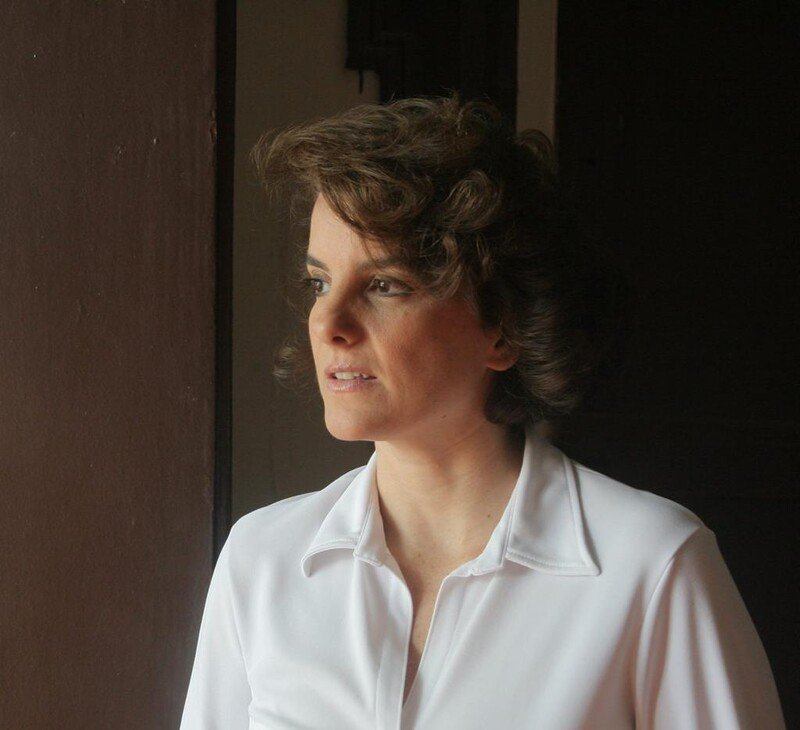
Duda Gorter is a Brazil-based independent filmmaker and storyteller whose artistic journey reflects a deep commitment to performance, narrative, and visual expression. With roots firmly planted in theatre, Gorter began her creative career as an actress, developing a strong understanding of character, stage presence, and dramatic structure. This early immersion in performance arts laid the foundation for her later work behind the camera.
Her transition from acting to directing was a natural progression. After gaining experience on stage, Gorter moved into the role of Assistant Director and later Director, working on numerous theatrical productions. These experiences allowed her to explore storytelling from a broader perspective—shaping performances, guiding creative teams, and bringing complex narratives to life. Theatre became the training ground where she refined her sense of pacing, emotional rhythm, and visual composition.
Over time, Gorter expanded her creative practice into the audiovisual world, exploring filmmaking and other screen-based storytelling forms. This shift allowed her to blend theatrical sensibilities with cinematic language. Working across multiple areas of audiovisual production, she developed a versatile skill set that includes directing, screenwriting, and visual storytelling.
Today, Duda Gorter is recognized as an independent film director and screenwriter, known particularly for crafting and directing her own projects. Writing her own screenplays gives her creative freedom to shape stories from concept to final image, allowing her voice as a storyteller to remain authentic and personal. Her work often reflects the sensibilities of independent cinema—character-driven narratives, emotional depth, and a focus on human experience.
Gorter represents a generation of filmmakers who move fluidly between artistic disciplines. Drawing from theatre, film, and broader audiovisual practices, she continues to develop projects that emphasize storytelling, performance, and creative independence. Her journey from stage actress to filmmaker demonstrates a steady evolution driven by curiosity, artistic exploration, and a passion for telling meaningful stories through multiple mediums.
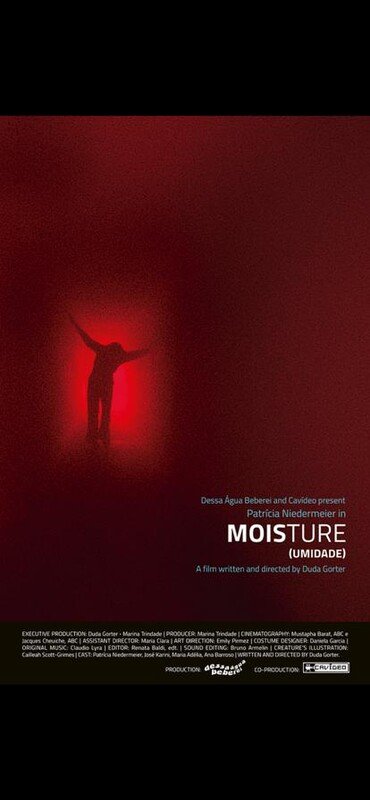
Film Reviewed by Swagata Mishra
Reviewed by Swagata Mishra
Written and directed by Duda Gorter, Moisture is a hypnotic short film that drifts effortlessly between narrative cinema and experimental poetry. Set in a futuristic Brazil overwhelmed by unrelenting rain, the film immerses viewers in a world where water is not merely a backdrop but a living force—shaping environments, emotions, and human relationships alike.
From its opening moments, Moisture establishes a striking sensory language. Cinematographers Mustapha Barat and Jacques Cheuiche craft images that feel almost tactile: glistening skin, soaked surfaces, and relentless rainfall dominate the frame. Gorter’s frequent use of extreme close-ups pulls the audience into intimate emotional spaces, particularly through the face of Dr. Anne, played with remarkable restraint by Patrícia Niedermeier. The camera lingers on her eyes and subtle expressions, allowing silence to speak louder than dialogue. This visual intimacy creates a powerful connection between character and viewer, encouraging contemplation rather than exposition.
Niedermeier carries the film with a performance that is quietly devastating. As Anne navigates her clinical work and personal isolation, her emotional weight is communicated through gesture and gaze rather than words. The supporting cast—Maria Adélia, José Karini, and Ana Barroso—mirror this subdued approach. Karini, as Anne’s romantic interest Thiago, brings warmth and ambiguity to their relationship. Their chemistry is understated but genuine, revealed through delicate body language and fleeting moments of tenderness that momentarily pierce Anne’s emotional fog.
What truly distinguishes Moisture is its atmosphere. A particularly memorable nighttime rain sequence, bathed in blue and yellow highlights, captures the film’s dual nature—simultaneously serene and unsettling. Water becomes a metaphor for rebirth, suffocation, memory, and emotional saturation. Gorter resists clear answers, instead inviting audiences to project their own meanings onto the film’s imagery.
More experiential than plot-driven, Moisture is a meditation on humanity’s symbiotic relationship with nature and the quiet emotional erosion that occurs when external forces grow uncontrollable. Its lingering unease and visual elegance remain with the viewer long after the final frame. Gorter’s film does not demand to be understood—it asks to be felt, absorbed, and reflected upon, like moisture itself seeping slowly into every corner of existence.
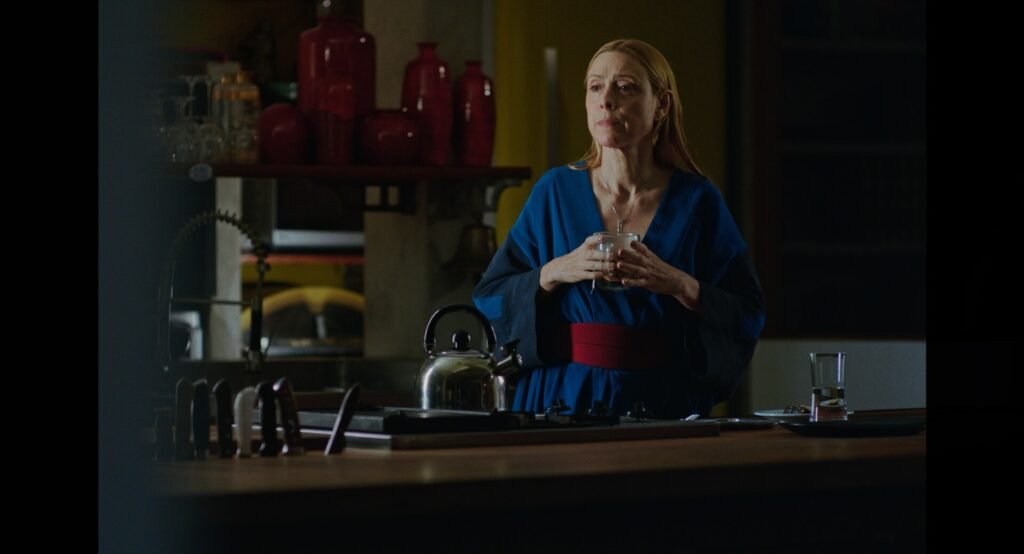
Duda Gorter’s Moisture: A Poetic Exploration of Isolation and Atmosphere
Independent Brazilian filmmaker Duda Gorter has steadily built a reputation as a distinctive visual storyteller, but it is her short film Moisture that has brought her work into sharper international focus. The film stands as a powerful example of Gorter’s cinematic voice—at once poetic, atmospheric, and emotionally introspective.
Running just over twenty minutes, Moisture unfolds in a bleak near-future setting where rain appears endless and inescapable. Streets glisten with constant water, interiors feel damp and heavy, and the atmosphere carries a sense of quiet tension. Rather than using the rain merely as a background element, Gorter transforms it into a central narrative device. The perpetual downpour becomes a metaphor for emotional saturation—suggesting pressure, fragility, and the subtle weight of human experience.
At the center of the story is Dr. Anne, a character navigating a world that feels both physically and psychologically oppressive. Through restrained performances and carefully constructed imagery, the film explores her internal landscape—one marked by solitude, reflection, and the search for connection in an increasingly alien environment.
What distinguishes Moisture from many contemporary short films is its visual storytelling approach. Dialogue is sparse, and much of the narrative unfolds through imagery rather than words. Gorter allows the camera to linger on textures—droplets of water, dimly lit rooms, silent gestures—creating a rhythm that feels almost meditative. These visual choices reflect her background in theatre, where atmosphere and physical expression often carry as much narrative weight as spoken dialogue.
The cinematography plays a crucial role in shaping the film’s mood. Close-ups capture subtle emotional shifts in the characters, while wider compositions emphasize the cold, rain-soaked world surrounding them. Light and shadow interact with reflective surfaces—windows, puddles, and damp walls—to create a tactile visual environment that audiences can almost feel.
Beyond its striking imagery, Moisture also resonates because of its thematic depth. Water, the film’s central motif, symbolizes both vulnerability and transformation. The constant rain mirrors the emotional states of the characters, suggesting that internal and external environments are deeply interconnected. In this way, Gorter crafts a narrative that is not just about a place or a moment in time, but about the fragile balance between human emotion and the natural world.Critics and festival audiences have responded strongly to the film’s atmospheric intensity and contemplative storytelling. Many have praised its ability to immerse viewers in a sensory experience where sound, texture, and visual rhythm combine to create a haunting cinematic tone.
For Duda Gorter, Moisture represents an important milestone in her creative journey. Drawing on her theatrical roots and expanding them through cinematic language, the film demonstrates her ability to construct deeply expressive visual narratives. It is a work that lingers in the mind—not through dramatic spectacle, but through subtle imagery and emotional resonance.As Gorter continues to develop new projects, Moisture stands as a defining piece of her filmography—an evocative short film that reveals the power of atmosphere, silence, and visual poetry in contemporary independent cinema.
Interview: Duda Gorter

1. What was the initial inspiration behind Moisture?
Director- Moisture arose from a feeling of great unease and anguish: between 2018 and 2022, Brazil was under a far-right fascist government that denied the severity of the Covid-19 pandemic( resulting in hundreds of thousands of deaths that could have been prevented), among many other atrocities against the Brazilian population. Moisture was born out of my perplexity and sadness.
2. Why did you choose water and rain as the central motif of the film?
When i wrote the film script, i was very emotionally fragile due to the political situation at the time. So i conceived the script going against the global view of Rio de Janeiro as a tourist destination, warm, sunny, with crowded beaches, samba, joy, etc…I chose to create an oppressive, dystopian atmosphere: a city with an ever-grey sky, where it rains each and every day and the humidity inevitably penetrates people’s bodies and minds. Water/Rain are also elements full of symbolism/meaning/metaphors. Water is a defining character in the film.
3. What does “moisture” symbolize for you—emotionally, environmentally, or philosophically?
As i mentioned, Moisture is a film born out of deep anguish, so i feel that the entire creative process was very cathartic for me. I poured all my sadness and indignation into this film, and i felt lighter and relieved when i finished this project. Moisture deals with a dystopian future, with characters struggling for a modicum of mental health so as not to succumb to the forces of nature( or if you wish, the force of evil) that can sometimes oppress/annihilate human beings.
4. Dr. Anne speaks very little. How did you construct her emotional journey through silence and visual storytelling?
This is a characteristic of my filmography. In practically all of my films, my characters speak very little. I prefer a type of Cinema that focuses more on mood and atmosphere than on verbal dialogue, and Dr.Anne follows this audiovisual approach of mine. Dr.Anne lives in a city with extremely high humidity in which it rains practically every day, so she is a woman oppressed by the city’s weather conditions and also by the constant and distressing presence of the Neo-Pentecostal religion that wants to impose itself on citizens through the Church of the Golden Affection Congregation. Within this universe, Dr.Anne has much more to observe than to talk about.
5. The film leaves much open to interpretation—how important is ambiguity in your storytelling?
Ambiguity is fundamental to my storytelling. Ever since i was a little girl and started watching films, i have appreciated works that do not impose a single vision on the viewer. Human beings are very intriguing and complex, and i find it much more interesting to leave layers in my films for each viewer to fill in according to their own subjectivity.
6. What drew you to extreme close-ups as a primary visual language for the film?
Moisture is an oppressive film that is open to various interpretations, including that of the protagonist’s mental health. So i chose to shoot some scenes with macro lenses to obtain extreme close-ups in order to increase the viewer’s discomfort and cause strangeness. I didn’t want people to watch this film in a relaxed, comfortable manner.
7. How did your collaboration with cinematographers Mustapha Barat and Jacques Cheuiche shape the film’s distinctive look?
Jacques Cheuiche is an extremely talented Cinematographer, and i have been fortunate to have him on my team for years. Moisture is already the third film of mine in which he is the DP, and i can say with immense joy that Jacques is a great creative partner. We understand each other perfectly and created Moisture’s visual identity right after the script stage.Mustapha Barat( an excellent Cinematographer) joined us on this film because Jacques was working on a television series and would not be able to be on set every day of shooting. My two Cinematographers and i understand each other very well, and the visual identity of Moisture turned out to be very satisfying and bold: exactly what i wanted!
8. The film carries strong environmental undertones. Was climate anxiety a conscious theme during development?
This question is very curious because many people who have seen Moisture ask me about climate anxiety as the central theme of this film, but this topic was unconscious at the beginning of the process: the element of water and the deep humidity of the film is much more a metaphor for a dark/fascist period in Brazil than climate anguish/anxiety.
9. How does Moisture explore the relationship between humanity and nature?
This correlation of forces is completely unequal. Human beings are tiny/irrelevant when confronted with the forces of nature. The final scene of Dr.Anne swimming in the ocean makes this very clear: The ocean can be both an element of annihilation, “swallowing” people with its gigantism, and a poetic element of liberation, relief for Dr.Anne( hence the inclusion of her scream at the end of the sequence).
10. What do you hope audiences feel or reflect on after experiencing Moisture?
Moisture is not a film that draws definitive conclusions about a particular theme. Quite the contrary, this film “embraces” several themes, and each viewer’s subjectivity will be drawn to whatever is most urgent to them. I just want each person to feel moved and inspired by the film.
Pageant Jury comment
Moisture, directed by Duda Gorter, is a beautifully atmospheric short film that demonstrates the power of visual storytelling. Through its rain-soaked world and carefully composed imagery, the film explores themes of isolation, vulnerability, and emotional depth with remarkable subtlety.
The jury was particularly impressed by Gorter’s confident direction and her ability to convey meaning through silence, texture, and mood rather than dialogue. With its evocative cinematography and contemplative tone, Moisture stands out as a poetic and immersive cinematic experience that reveals a distinctive and promising directorial voice.
Full cast & crew