Writer’s Statement
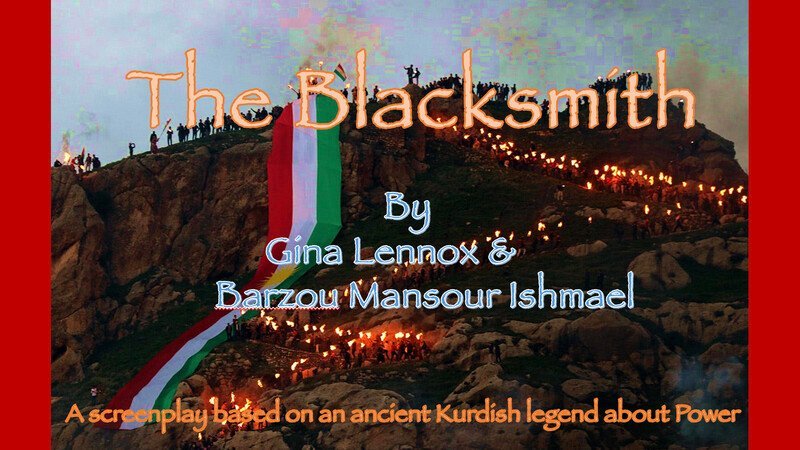
Gina Lennox and Barzou Ishmael Mansour embarked on co-writing a play called NOWROZ after the USA declared war on terrorism in response to 9/11. In this play they time jumped between the ancient and modern worlds. It had a play reading in 2002 and was warmly received by children and adults alike. In 2009 Mansour returned to Kurdistan but Lennox felt the project only gained in relevance as tyrants and puppets gain positions of power around the world. It’s as if the whole world has gone crazy, normalising the bizarre. Reality has become a satire with tragic undertones. What to do? Lennox turned The Blacksmith into a screenplay setting 95 percent in the ancient world, adding plots, characters and scenes and refining just about everything so an audience can feast on all the light, sound and movement, laughter and tears, sometimes all at once, with unforgettable characters. The story is relevant for the twenty-first century because: • Kawa is a hero and anti-hero – like us all. • Zohag quotes from speeches made by modern leaders – George W. Bush Junior, Recep Tayyip Erdogan & Qassem Soleimani, to name a few. • The serpent’s appetite for human brains is capitalism’s appetite for the same. • Modern tyrants call freedom fighters ‘terrorists‘. • Kawa’s daughter, Dilber, represents the brave Kurdish and Ukrainian women on the front lines. • The masked soldiers represent modern surveillance technologies. • Those in power distract, blame and spread misinformation to confuse and render helpless well-meaning citizens. • The failure of Kawa’s uprising is seen in the failures of the ‘Arab Spring’ and most revolutions after decades of tyranny, even when the military side with the people. COMPARABLES It is hard to find other feature films with the same mix of melodrama, absurdity, tragedy and search for meaning. If pressed, The Blacksmith is a cross between: • The Rocky Horror Picture Show (1975) (USD $116 million) • Shakespeare’s King Lear (2008, 2018), Kurosawa’s Ran (1985) (USD $55 million) and The Northman That films based on legends can be popular and high grossing is seen in • Troy (2004) (USD $483 m) and • Wonder Woman (2017) (USD $824 m). As written The Blacksmith would not be a big budget screenplay, although battle scenes could be included if the budget allowed. Thus, The Blacksmith’s embrace of the fantastic, absurd, comedic and tragic, its rituals, songs, dance, acrobatics, melodrama, philosophical questions that every child asks and adults forget to, and its spectacular effects speak to a four-quadrant audience. COMMENTS ON SCRIPT Core Strengths • Myth → revolution → disillusion → modern continuation is structurally strong • Music functions as ritual and collective memory, not performance • Ending avoids triumph — focuses on responsibility • Jester functions effectively as chorus across time • Dilber’s sacrifice reframes the entire narrative Structural Clarity • Kawa = legend • Delair = future • Dilber = moral inheritance • Jester = witness across time What Distinguishes the Script • Refusal of conventional heroic resolution • Integration of music into narrative fabric • Political allegory emerging from myth rather than imposed onto it • Female agency embedded in turning points (not stated, enacted) Production Insight (Critical) This is not: • a commercial “historical epic” • a conventional musical It sits within: • mythic / ritual cinema • festival-driven co-production • director-led projects Requiring: • a director with visual and musical intelligence • (a) producer/s willing to protect vision and tone.
Credits
| Writer | Gina Lennox People of the Cross (Simon & Schuster, 1993), Struck by Lightning (Allen & Unwin, 1996), In Search of Heroes (Allen & Unwin, 1998), Fire,Snow & Honey – Voices from Kurdistan (Halstead Press, 2001), Forged by War (Melbourne University Press, 2005) . Wrote tens of published reports (Seeh kurdishlobbyaustralia.com), Producer of many radio programs for ABC, editor of documentaries, writer of documentaries and unproduced feature films |
THE BLACKSMITH was submitted to Pageant Film Festival through FilmFreeway in Season 16. Read the Pageant Magazine issue for the season or browse all festival results.