
Two Visionary Screenplays, One Unforgettable Season at the Pageant Film Festival
Every season at the Pageant Film Festival, scripts arrive carrying the quiet promise of cinema yet to be born. Some stories unfold gently, others explode with imagination. But occasionally, a pair of screenplays emerges that not only captivate the jury but also spark a deeper conversation about the future of storytelling itself.
This season, two remarkable works rose to the forefront of that conversation:
Michelle Lynn’s Behind the Algorithm
and
Brad Reinhold’s The Holographic Rain: Whitehat Anti-Hero.
Both scripts were submitted for the festival’s highest screenwriting honor — Best Script of the Season — and both explore one of the defining questions of our technological age:
How does humanity retain its voice in a world increasingly shaped by algorithms?
What makes these two works especially fascinating is not merely their shared thematic territory, but the radically different storytelling paths taken by their creators. One writer builds suspense through realism and institutional intrigue. The other constructs an expansive cyber-myth where memory and truth themselves become revolutionary forces.
Together, they represent two powerful visions of modern science-fiction storytelling.
Michelle Lynn and the Precision of the Modern Tech Thriller
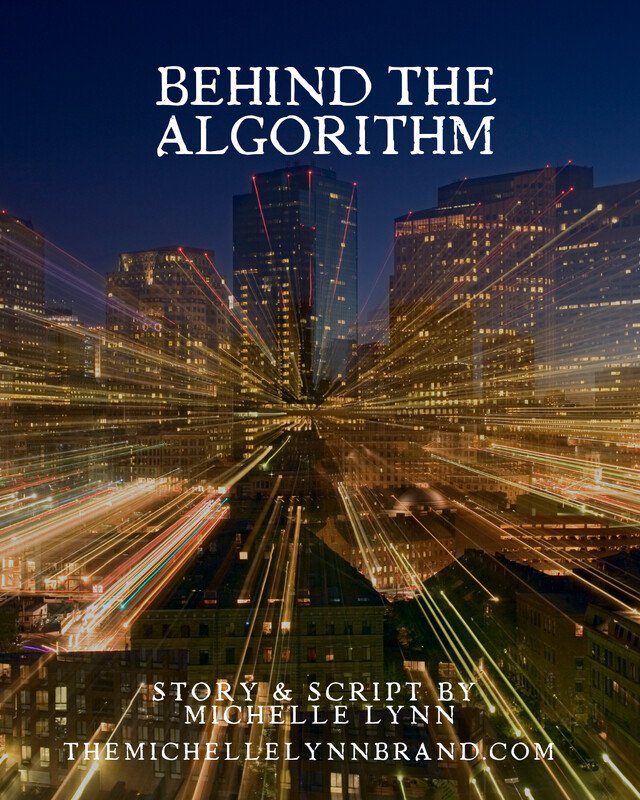
With Behind the Algorithm, Michelle Lynn demonstrates a keen understanding of the mechanics of suspense.
The screenplay begins with a tense and cinematic sequence: Autumn Summers navigating a high-tech corporate office late at night, attempting to access a computer system that appears far more dangerous than it first seems. The moment alarms are triggered and shadowy figures begin pursuit, the script establishes its central rhythm — urgency, danger, and discovery.
From there, the story unfolds across multiple narrative spaces: sleek technology boardrooms, emergency hospital rooms, and investigative environments where fragments of a hidden conspiracy slowly come together.
At the heart of the narrative lies a powerful idea — the Helix 4.0 system, an artificial intelligence capable not merely of predicting medical outcomes but influencing them. Within the corporate presentation scene of the script, the technology is described as a system that can subtly engineer illnesses and shape prescription patterns across healthcare networks.
This concept gives Behind the Algorithm its unsettling resonance.
Rather than imagining distant science-fiction technology, Michelle Lynn situates her story within systems that already exist around us: healthcare institutions, pharmaceutical economics, insurance frameworks, and corporate power structures.
The tension of the screenplay emerges not only from the conspiracy itself but from the human stakes embedded within it.
Autumn Summers stands at the emotional center of the story — a woman caught between two powerful forces. On one side lies the vast technological empire built by her husband, Chase Summers. On the other lies the growing realization that the system he controls may be manipulating human lives on a massive scale.
Through characters like the compassionate trauma surgeon Dr. Mateo Sinatra and investigators uncovering disturbing connections between deaths and data systems, Lynn constructs a narrative that echoes the legacy of classic conspiracy thrillers while bringing those themes firmly into the digital age.
What ultimately makes Behind the Algorithm compelling is its sense of plausibility. The world it portrays does not feel distant or speculative. It feels dangerously close to reality.
Brad Reinhold and the Mythology of the Digital Future
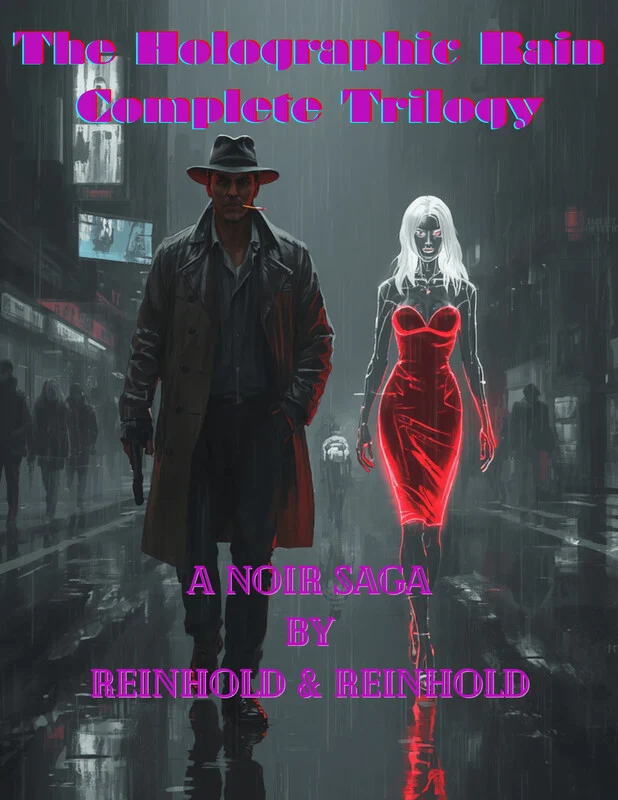
If Behind the Algorithm reflects the anxieties of the present, Brad Reinhold’s The Holographic Rain pushes boldly into the imaginative territory of the future.
The screenplay opens with a striking visual: a digital wasteland where rain falls not as water but as flickering fragments of light across a simulated landscape.
From its first pages, the script signals that it is operating within a very different storytelling mode. Reinhold’s writing blends cyberpunk aesthetics with philosophical reflection, creating a world that feels at once futuristic, poetic, and mythic.
At the center of this world stands Kora, a holographic anti-hero navigating a dystopian metropolis known as VirtuCity. In this city, systems of surveillance and information control shape reality itself. Early in the narrative, the script suggests that truth no longer exists openly but instead survives within hidden fragments of code and data networks.
Kora becomes both guide and rebel within this landscape — a figure who moves between digital and physical realms while uncovering deeper layers of the system that governs the city.
Along the way she encounters characters such as Luke, a young hacker drawn into her orbit, as well as Aurelian and Lyric, figures tied to the deeper mythology of memory and resistance that underlies the narrative.Where Michelle Lynn’s screenplay focuses on the mechanics of conspiracy, Reinhold’s script operates at the level of symbolic storytelling.
Technology in this world is not simply a tool of power. It shapes identity, memory, belief, and the way reality itself is experienced.
Through imagery, philosophical dialogue, and expansive world-building, The Holographic Rain creates a cinematic environment that feels both futuristic and timeless — a cyber-noir myth about truth surviving within systems designed to erase it.
Two Writers, Two Visions of Technology
What makes these two screenplays particularly compelling when viewed together is how each writer approaches the subject of technological power.
Michelle Lynn writes with the careful precision of a thriller architect. Her story unfolds through investigation, character relationships, and the gradual exposure of a hidden system embedded within real institutions.
Brad Reinhold writes with the imaginative freedom of speculative mythology. His world is built from digital symbolism, philosophical reflection, and visual spectacle.

One narrative asks:
What happens when corporations quietly weaponize technology within the systems we trust?
The other asks:
What happens when technology reshapes reality itself — and truth must be rediscovered within the ruins of that system?
Both approaches reveal the remarkable range of contemporary science-fiction storytelling.
The Jury’s Decision
Choosing the Best Script of the Season was not an easy decision for the Pageant Film Festival jury.Both works demonstrated originality, strong narrative voices, and ambitious thematic exploration.
Behind the Algorithm impressed the jury with its grounded realism, suspenseful pacing, and timely engagement with the ethical challenges of artificial intelligence in modern society.
However, after extensive discussion, one screenplay ultimately stood out for the boldness of its creative vision.
🏆 Best Script of the Season
The Holographic Rain: Whitehat Anti-Hero
by Brad Reinhold
The jury recognized Reinhold’s screenplay for its distinctive voice, imaginative world-building, and its ability to transform technological themes into something deeply cinematic and philosophically resonant.
Through the character of Kora and the layered mythology of VirtuCity, the script expands the possibilities of what science-fiction storytelling can look like on screen.
Honoring the Craft of Both Writers
At the same time, the Pageant Film Festival would like to acknowledge the outstanding work of Michelle Lynn, whose screenplay Behind the Algorithm represents a powerful example of contemporary thriller storytelling.
Her script reminds us that technology’s greatest impact may not lie in distant futures but in the systems already shaping the present.Together, these two writers demonstrate the richness and diversity of modern screenwriting.
One reveals the dangers hidden inside the institutions of today.
The other imagines the myths that may emerge from the digital landscapes of tomorrow.
Different tones.
Different narrative worlds.
But the same fearless creative spirit.
And for the Pageant Film Festival, that spirit — the courage to explore new ideas through storytelling — is what makes cinema continue to evolve.